2026 Season Rulebook
2026 Season Rulebook
Table of Content
Table of Content
1. Introduction
1. Introduction
The International Dance League (IDL) Pro Division is a global touring league reframing dance competitions as a sport. This rulebook outlines the standards, format, and expectations for all participating teams across the 2026 IDL Season to ensure fair competition and world-class presentation.
The International Dance League (IDL) Pro Division is a global touring league reframing dance competitions as a sport. This rulebook outlines the standards, format, and expectations for all participating teams across the 2026 IDL Season to ensure fair competition and world-class presentation.
2. Tour Schedule
2. Tour Schedule
DATE
CITY
VENUE
May 2, 2026

New York City, USA
Hammerstein Ballroom
May 23, 2026

Vancouver, Canada
UBC Doug Mitchell Thunderbird Sports Centre
June 20, 2026

Sydney, Australia
Hordern Pavilion
August, 2026

Seoul, South Korea
TBC
September 19, 2026
Los Angeles, USA
Shrine Expo Hall
September 20, 2026
Los Angeles, USA
Shrine Expo Hall
3. Team Composition
3. Team Composition
Full Team Roster (Season-Long)
Each Pro Division team must submit a season roster prior to the start of the 2026 season.
Maximum roster size: 30 dancers
Minimum roster size: 20 dancers
Managers allotted for travel: 2
Teams may utilize more choreographers, managers, coaches, etc. at their own discretion, provided they report all choreography credits to IDL.
Rosters are locked for the duration of the season
No roster additions, removals, or substitutions are permitted once the season begins.
Full Team Roster (Season-Long)
Each Pro Division team must submit a season roster prior to the start of the 2026 season.
Maximum roster size: 30 dancers
Minimum roster size: 20 dancers
Managers allotted for travel: 2
Teams may utilize more choreographers, managers, coaches, etc. at their own discretion, provided they report all choreography credits to IDL.
Rosters are locked for the duration of the season
No roster additions, removals, or substitutions are permitted once the season begins.
Lineups (Per-Series basis)
For each competition (“Series”), teams must designate a 20-dancer lineup from their approved full roster.
Lineups must be exactly 20 dancers, no more, no less.
The same 20-dancer lineup must be used for all rounds of that Series.
Lineups may change between competitions.
Only lineup dancers will be traveled and credentialed for competition.
Lineups (Per-Series basis)
For each competition (“Series”), teams must designate a 20-dancer lineup from their approved full roster.
Lineups must be exactly 20 dancers, no more, no less.
The same 20-dancer lineup must be used for all rounds of that Series.
Lineups may change between competitions.
Only lineup dancers will be traveled and credentialed for competition.
Injury & Absence
In the event of injury or unforeseen circumstances, teams may replace a dancer using another rostered dancer. Teams may instead elect to compete with fewer than 20 dancers; however, competing with fewer than 20 dancers may result in lower scores across some categories (see Appendix A).
Injuries and absence, regardless of intent to replace the dancer, must be reported to IDL League Operations immediately in writing via email. All injury-related accommodations are subject to IDL approval and final discretion.
Injury & Absence
In the event of injury or unforeseen circumstances, teams may replace a dancer using another rostered dancer. Teams may instead elect to compete with fewer than 20 dancers; however, competing with fewer than 20 dancers may result in lower scores across some categories (see Appendix A).
Injuries and absence, regardless of intent to replace the dancer, must be reported to IDL League Operations immediately in writing via email. All injury-related accommodations are subject to IDL approval and final discretion.
4. Age Eligibility & Minor Athlete Participation
4. Age Eligibility & Minor Athlete Participation
Eligibility
Dancers are eligible to participate in the Pro Division only if they were born prior to September 1, 2009. Proof of age, in the form of a valid government-issued identification document or certified birth certificate, must be submitted to the organization upon request and prior to roster certification. Any dancer who cannot provide adequate proof of age will be deemed ineligible until such documentation is provided.
Eligibility
Dancers are eligible to participate in the Pro Division only if they were born prior to September 1, 2009. Proof of age, in the form of a valid government-issued identification document or certified birth certificate, must be submitted to the organization upon request and prior to roster certification. Any dancer who cannot provide adequate proof of age will be deemed ineligible until such documentation is provided.
Minor Athlete Consent Requirement
Any dancer who has not yet reached eighteen (18) years of age at the time of competition must have a parent or legal guardian execute a Minor Athlete Participation Consent Form prior to participating at each applicable tour stop. This requirement applies at every individual event and is not satisfied by consent given at a prior tour stop. Consent may be withdrawn by the parent or legal guardian at any time, and such withdrawal will render the dancer ineligible to participate at that event.
The Minor Athlete Participation Consent Form includes assumption of risk, indemnification, and name, image, and likeness (NIL) license provisions, the terms of which are incorporated by reference into these rules.
Minor Athlete Consent Requirement
Any dancer who has not yet reached eighteen (18) years of age at the time of competition must have a parent or legal guardian execute a Minor Athlete Participation Consent Form prior to participating at each applicable tour stop. This requirement applies at every individual event and is not satisfied by consent given at a prior tour stop. Consent may be withdrawn by the parent or legal guardian at any time, and such withdrawal will render the dancer ineligible to participate at that event.
The Minor Athlete Participation Consent Form includes assumption of risk, indemnification, and name, image, and likeness (NIL) license provisions, the terms of which are incorporated by reference into these rules.
Team Director Responsibility
It is the sole responsibility of the team director or designated roster manager to ensure that a fully executed Minor Athlete Participation Consent Form is completed, submitted, and on file for each minor dancer prior to the start of competition at each applicable tour stop. IDL will not be responsible for verifying or obtaining consent on behalf of any team or individual.
Team Director Responsibility
It is the sole responsibility of the team director or designated roster manager to ensure that a fully executed Minor Athlete Participation Consent Form is completed, submitted, and on file for each minor dancer prior to the start of competition at each applicable tour stop. IDL will not be responsible for verifying or obtaining consent on behalf of any team or individual.
Enforcement
Any dancer found to be competing without a fully executed Minor Athlete Participation Consent Form on file for that tour stop will be immediately removed from competition. IDL reserves the right to void scores, withhold placements, or disqualify a team if a minor athlete’s participation was unauthorized. Failure to comply with the consent requirements set forth in this section is the responsibility of the team director and may result in additional disciplinary action at the organization’s discretion.
Enforcement
Any dancer found to be competing without a fully executed Minor Athlete Participation Consent Form on file for that tour stop will be immediately removed from competition. IDL reserves the right to void scores, withhold placements, or disqualify a team if a minor athlete’s participation was unauthorized. Failure to comply with the consent requirements set forth in this section is the responsibility of the team director and may result in additional disciplinary action at the organization’s discretion.
5. Performance Requirements
5. Performance Requirements
Each team must prepare two (2) original performance sets.
Maximum set length: 3 minutes
Minimum set length: 2 minutes, 30 seconds
Each team must prepare two (2) original performance sets.
Maximum set length: 3 minutes
Minimum set length: 2 minutes, 30 seconds
Repeat use of music & choreography across sets is prohibited (see Appendix A for deductions).
Repeat use of music & choreography across sets is prohibited (see Appendix A for deductions).
Teams may put any number of their lineup dancers on stage at any given time, but each individual in the 20-dancer lineup is required to appear on stage at least once in each set (see Section 3 for the Injury & Absence exception).
Teams may put any number of their lineup dancers on stage at any given time, but each individual in the 20-dancer lineup is required to appear on stage at least once in each set (see Section 3 for the Injury & Absence exception).
Choreography Ownership
Teams may only compete utilizing choreography developed by their own creative & director teams, with explicit permission from all choreographers to use their work. Using any pieces of choreography that were neither created for the team, licensed by the original choreographer, or within the Repeated Use of Choreography deductions clause (see Appendix A) will result in a penalty.
Choreography Ownership
Teams may only compete utilizing choreography developed by their own creative & director teams, with explicit permission from all choreographers to use their work. Using any pieces of choreography that were neither created for the team, licensed by the original choreographer, or within the Repeated Use of Choreography deductions clause (see Appendix A) will result in a penalty.
Technical Difficulties & Force Majeure
In the event of a technical failure during a performance—including but not limited to music playback malfunction, power outage, or venue-level disruption—the following procedures apply:
If music playback fails mid-performance due to an IDL production error, the affected team will be offered a full restart of their set from the beginning. The team may decline the restart and accept the performance as-is.
If a venue-level disruption (e.g. power outage, fire alarm, or emergency evacuation) interrupts competition, IDL League Operations will determine whether to delay, reschedule, or cancel the affected portion of the event.
All decisions regarding stoppages, restarts, and event modifications are made solely by IDL League Operations in consultation with the Head Judges. These decisions are final.
If a stoppage exceeds 30 minutes and the event cannot reasonably resume, IDL reserves the right to declare a postponement for any unperformed sets. Scoring for completed performances will stand.
Technical issues caused by the performing team (e.g. submitting a corrupt audio file) are not eligible for a restart and will be treated as an incomplete performance.
Technical Difficulties & Force Majeure
In the event of a technical failure during a performance—including but not limited to music playback malfunction, power outage, or venue-level disruption—the following procedures apply:
If music playback fails mid-performance due to an IDL production error, the affected team will be offered a full restart of their set from the beginning. The team may decline the restart and accept the performance as-is.
If a venue-level disruption (e.g. power outage, fire alarm, or emergency evacuation) interrupts competition, IDL League Operations will determine whether to delay, reschedule, or cancel the affected portion of the event.
All decisions regarding stoppages, restarts, and event modifications are made solely by IDL League Operations in consultation with the Head Judges. These decisions are final.
If a stoppage exceeds 30 minutes and the event cannot reasonably resume, IDL reserves the right to declare a postponement for any unperformed sets. Scoring for completed performances will stand.
Technical issues caused by the performing team (e.g. submitting a corrupt audio file) are not eligible for a restart and will be treated as an incomplete performance.
6. Stage Dimensions & Details
6. Stage Dimensions & Details
Full Team Roster (Season-Long)
Approximate Usable Stage Size: 40 ft W x 35 ft D
Depth may vary depending on final LED configuration
There will be a crossover backstage for team movement, unless otherwise noted.
Wings: 1 set of downstage LEDs
Performances must exclusively utilize the stage. Any entrance/exit from any other area that is not the wings will result in immediate disqualification.
Teams should prepare choreography with these dimensions in mind. Final stage specifications will be communicated as soon as they’re available.
Full Team Roster (Season-Long)
Approximate Usable Stage Size: 40 ft W x 35 ft D
Depth may vary depending on final LED configuration
There will be a crossover backstage for team movement, unless otherwise noted.
Wings: 1 set of downstage LEDs
Performances must exclusively utilize the stage. Any entrance/exit from any other area that is not the wings will result in immediate disqualification.
Teams should prepare choreography with these dimensions in mind. Final stage specifications will be communicated as soon as they’re available.
7. Music Policy
7. Music Policy
Music Submission & Licensing
IDL uses ClicknClear as its exclusive music licensing and verification platform. All music must be submitted, cleared, and approved through idl.clicknclear.com. Music submitted through email, cloud links, or messaging platforms will not be accepted.
Music Submission & Licensing
IDL uses ClicknClear as its exclusive music licensing and verification platform. All music must be submitted, cleared, and approved through idl.clicknclear.com. Music submitted through email, cloud links, or messaging platforms will not be accepted.
Song Allocation
IDL will license up to 24 songs per team for the full season through ClicknClear. This allocation covers all Pro Division competition sets and includes clearance for live performance, social media, video-on-demand, streaming distribution, and brand or sponsorship usage.
Original Music Exception:
Any songs created/owned by teams will not count against this limit, provided they give IDL complete, written license to use their music in accordance with the above usage.
By submitting original music, teams grant IDL perpetual, unrestricted use for distribution and live performance.
Song Allocation
IDL will license up to 24 songs per team for the full season through ClicknClear. This allocation covers all Pro Division competition sets and includes clearance for live performance, social media, video-on-demand, streaming distribution, and brand or sponsorship usage.
Original Music Exception:
Any songs created/owned by teams will not count against this limit, provided they give IDL complete, written license to use their music in accordance with the above usage.
By submitting original music, teams grant IDL perpetual, unrestricted use for distribution and live performance.
Song Usage Rules
Each song may be used in only one set per team.
Multiple teams may use the same song, regardless of whether they are being used in the same Series, Matchup, etc.
Teams planning to use the same song in a Matchup will be notified by IDL League Ops and given the opportunity to switch which set they plan to use.
If a team does not advance to Round 2, their unused second set may be used for a future competition. The songs from any unused set will not count toward the 24 cleared songs per season limit.
Teams may use as many songs per set as they choose, provided they do not exceed the 24 cleared songs per season limit.
Song Usage Rules
Each song may be used in only one set per team.
Multiple teams may use the same song, regardless of whether they are being used in the same Series, Matchup, etc.
Teams planning to use the same song in a Matchup will be notified by IDL League Ops and given the opportunity to switch which set they plan to use.
If a team does not advance to Round 2, their unused second set may be used for a future competition. The songs from any unused set will not count toward the 24 cleared songs per season limit.
Teams may use as many songs per set as they choose, provided they do not exceed the 24 cleared songs per season limit.
Uncleared Music Policy
Teams that use uncleared music will be prohibited from performing and will forfeit the Series, resulting in 0 Season Standings Points for that competition.
Uncleared Music Policy
Teams that use uncleared music will be prohibited from performing and will forfeit the Series, resulting in 0 Season Standings Points for that competition.
Mixes & Editing
All mixes must consist exclusively of fully cleared tracks.
Each song used in a remix counts as one song toward the 24-song allocation (see Original Music Exception).
Only the exact cleared audio files may be used. No other version of the cleared song (eg. live version) may be utilized unless explicitly cleared by IDL.
Permitted audio elements to use in remixes include DAW stock sounds, public-domain sounds, and original sound design.
No samples, vocals, lyrics, or audio elements from uncleared tracks are permitted. ClicknClear’s verification system is final.
Mixes & Editing
All mixes must consist exclusively of fully cleared tracks.
Each song used in a remix counts as one song toward the 24-song allocation (see Original Music Exception).
Only the exact cleared audio files may be used. No other version of the cleared song (eg. live version) may be utilized unless explicitly cleared by IDL.
Permitted audio elements to use in remixes include DAW stock sounds, public-domain sounds, and original sound design.
No samples, vocals, lyrics, or audio elements from uncleared tracks are permitted. ClicknClear’s verification system is final.
Prohibited Language
Explicit profanity:
Any words commonly considered as more explicit than moderate profanity such as “shit”, “bitch”, “ass”, “damn”, “hell”, and similar terms.
This prohibition applies to all versions including censored, bleeped, or muted audio where the word remains audibly identifiable.
Slurs and hate speech:
Derogatory language targeting race, ethnicity, religion, gender, sexual orientation, disability, or other protected characteristics.
This prohibition applies regardless of whether such language has been reclaimed within certain communities.
Prohibited Language
Explicit profanity:
Any words commonly considered as more explicit than moderate profanity such as “shit”, “bitch”, “ass”, “damn”, “hell”, and similar terms.
This prohibition applies to all versions including censored, bleeped, or muted audio where the word remains audibly identifiable.
Slurs and hate speech:
Derogatory language targeting race, ethnicity, religion, gender, sexual orientation, disability, or other protected characteristics.
This prohibition applies regardless of whether such language has been reclaimed within certain communities.
Compliance Requirements
Teams are responsible for ensuring all submitted music is compliant. If a licensed track contains prohibited content, teams must edit or remove the prohibited language themselves. ClicknClear licensing covers only the rights to use the song; it does not indicate content compliance. Teams must submit only the exact audio file that will be performed.
Teams that perform prohibited content may face Scoresheet Point deductions or disqualification. Performances containing prohibited content will not be distributed via livestream, social media, or video-on-demand platforms.
Compliance Requirements
Teams are responsible for ensuring all submitted music is compliant. If a licensed track contains prohibited content, teams must edit or remove the prohibited language themselves. ClicknClear licensing covers only the rights to use the song; it does not indicate content compliance. Teams must submit only the exact audio file that will be performed.
Teams that perform prohibited content may face Scoresheet Point deductions or disqualification. Performances containing prohibited content will not be distributed via livestream, social media, or video-on-demand platforms.
Deadlines
Music submission deadlines are set by IDL and communicated in advance. Submissions received after the deadline will not be used. No exceptions will be granted.
Deadlines
Music submission deadlines are set by IDL and communicated in advance. Submissions received after the deadline will not be used. No exceptions will be granted.
8. Jerseys, Costuming, & Props
8. Jerseys, Costuming, & Props
Jerseys & Costuming
All Pro Division dancers must wear an official IDL jersey while performing on stage. Two (2) approved jersey fits are distributed.
Dancers may wear either fit at team discretion, and mixing fits within a team is allowed.
Each dancer will receive one jersey set for the full season.
Size-related alterations may be permitted with IDL approval.
Jerseys damaged through normal wear and tear will be replaced by IDL.
Names, numbers, logos, and sponsor patches must remain visible at all times.
Layering that obscures any jersey element is not permitted.
Teams are responsible for and may wear any underlayers, bottoms, jewelry, and accessories they desire as listed under the Accessories section, provided the following is all true:
IDL does not have an existing sponsorship deal that mandates the usage of particular pieces as a part of the IDL uniform.
All elective articles of clothing, accessories, and shoes do not have any visible branding or logos and adhere to the guidelines below.
Jerseys & Costuming
All Pro Division dancers must wear an official IDL jersey while performing on stage. Two (2) approved jersey fits are distributed.
Dancers may wear either fit at team discretion, and mixing fits within a team is allowed.
Each dancer will receive one jersey set for the full season.
Size-related alterations may be permitted with IDL approval.
Jerseys damaged through normal wear and tear will be replaced by IDL.
Names, numbers, logos, and sponsor patches must remain visible at all times.
Layering that obscures any jersey element is not permitted.
Teams are responsible for and may wear any underlayers, bottoms, jewelry, and accessories they desire as listed under the Accessories section, provided the following is all true:
IDL does not have an existing sponsorship deal that mandates the usage of particular pieces as a part of the IDL uniform.
All elective articles of clothing, accessories, and shoes do not have any visible branding or logos and adhere to the guidelines below.
Branding & Logos
All branding & logo inclusions—including the local sponsorship patches available on the official IDL Jerseys—are subject to IDL approval.
Appearance of any branding & logos that have not been approved in writing by IDL on any article of clothing, accessory, etc. is strictly prohibited.
Branding & Logos
All branding & logo inclusions—including the local sponsorship patches available on the official IDL Jerseys—are subject to IDL approval.
Appearance of any branding & logos that have not been approved in writing by IDL on any article of clothing, accessory, etc. is strictly prohibited.
Accessories
Accessories are permitted only if they are worn on the body, non-electronic, and function as reasonable apparel items or accessories logically tied to the set’s creative vision. Ex. Gloves, hats, wigs, glasses, masks, towels, headsets, etc.
Loose items such as bags, umbrellas, or handheld objects are prohibited.
Accessories
Accessories are permitted only if they are worn on the body, non-electronic, and function as reasonable apparel items or accessories logically tied to the set’s creative vision. Ex. Gloves, hats, wigs, glasses, masks, towels, headsets, etc.
Loose items such as bags, umbrellas, or handheld objects are prohibited.
Props & Production
IDL will ensure that teams are clearly visible on stage at all times and that any backdrop visuals will not interfere with any team’s choreography.
No props/set design of any kind are permitted. (See Appendix A “Usage of Props” for deductions).
Teams may not introduce lighting, sound, video, or production elements in any way.
IDL controls all lighting and visual environments during performances.
This includes but is not limited to lighting cues, LED Backdrops, and any additional staging/lighting elements.
Props & Production
IDL will ensure that teams are clearly visible on stage at all times and that any backdrop visuals will not interfere with any team’s choreography.
No props/set design of any kind are permitted. (See Appendix A “Usage of Props” for deductions).
Teams may not introduce lighting, sound, video, or production elements in any way.
IDL controls all lighting and visual environments during performances.
This includes but is not limited to lighting cues, LED Backdrops, and any additional staging/lighting elements.
9. Tech Rehearsal
9. Tech Rehearsal
Each team will participate in a designated tech slot the day before each event. Tech is the final opportunity to clarify spacing needs and get familiar with the lighting/sound in-venue. During tech, teams will identify which set they plan to use for their Round 1 and Round 2 performances. This decision will be final.
Teams may not observe other teams’ tech rehearsals.
Each team will participate in a designated tech slot the day before each event. Tech is the final opportunity to clarify spacing needs and get familiar with the lighting/sound in-venue. During tech, teams will identify which set they plan to use for their Round 1 and Round 2 performances. This decision will be final.
Teams may not observe other teams’ tech rehearsals.
10. Competition Format
10. Competition Format
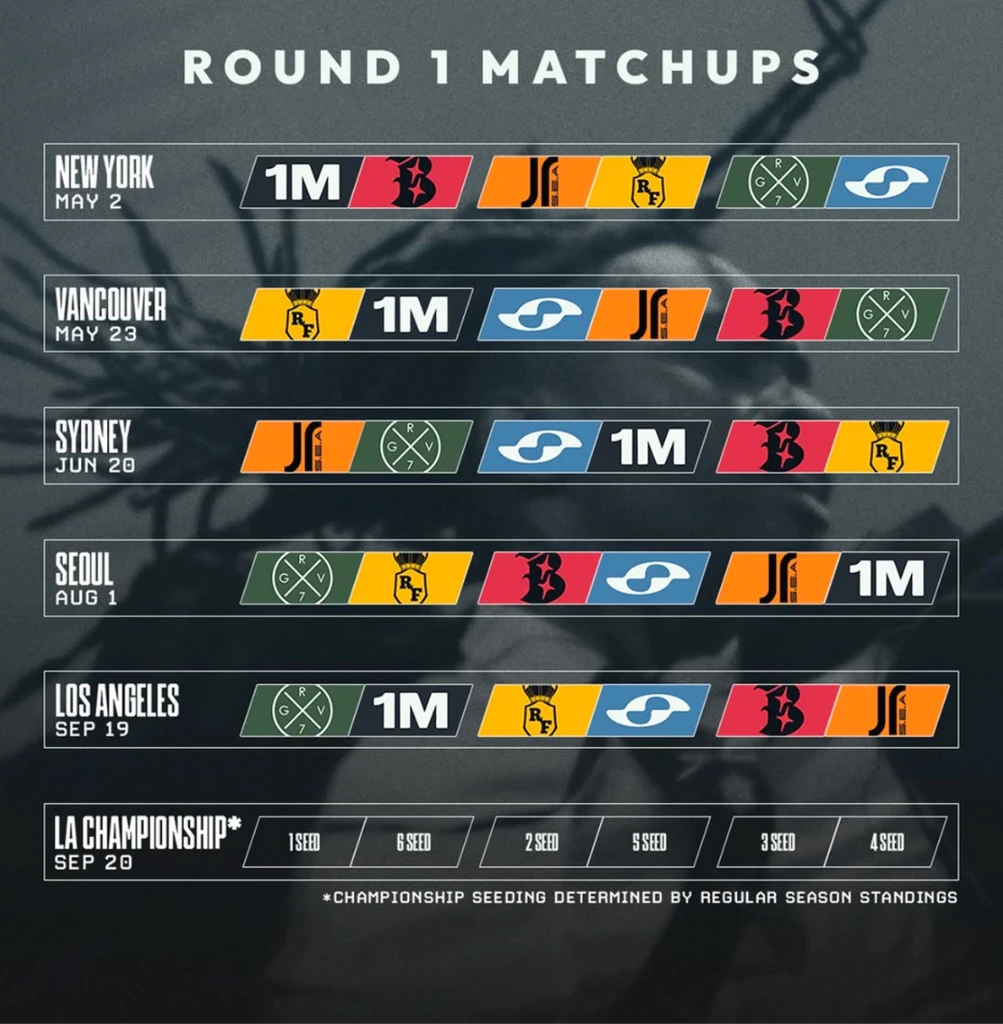
Each IDL Series consists of 2 rounds for the Pro Division. The Regular Season schedule is structured as a complete round-robin: over the course of the first five (5) Series, each team is matched against every other Pro Division team exactly once in Round 1. See Appendix B for the full 2026 Round 1 matchup schedule.
Each IDL Series consists of 2 rounds for the Pro Division. The Regular Season schedule is structured as a complete round-robin: over the course of the first five (5) Series, each team is matched against every other Pro Division team exactly once in Round 1. See Appendix B for the full 2026 Round 1 matchup schedule.
Round 1 – Head-to-Head Matchups
Matchups involve exactly 2 teams. The winning team moves on to the next round, and the losing team is eliminated from the remainder of the Series.
Performance order within a Matchup is determined via coin toss:
One designated team member per matchup will participate.
The host will choose which team calls the toss.
If called correctly, that team selects whether their team goes first or second. If incorrect, the other team chooses.
Round 1 – Head-to-Head Matchups
Matchups involve exactly 2 teams. The winning team moves on to the next round, and the losing team is eliminated from the remainder of the Series.
Performance order within a Matchup is determined via coin toss:
One designated team member per matchup will participate.
The host will choose which team calls the toss.
If called correctly, that team selects whether their team goes first or second. If incorrect, the other team chooses.
Round 2 – Top 3
The performance order of the 3 advancing teams is sorted by average judge score from Round 1.
Performance order:
Lowest average Round 1 score performs first.
Next highest average Round 1 score performs second.
Highest average Round 1 score performs last.
Each team must perform a new, unrepeated set. No previously used songs or choreography from that team may be included.
Round 2 – Top 3
The performance order of the 3 advancing teams is sorted by average judge score from Round 1.
Performance order:
Lowest average Round 1 score performs first.
Next highest average Round 1 score performs second.
Highest average Round 1 score performs last.
Each team must perform a new, unrepeated set. No previously used songs or choreography from that team may be included.
11. Judging & Scoring
11. Judging & Scoring
Judging Panel
The judging panel consists of 6 scoring judges (which may include one Head Judge) plus a non-scoring Deduction Judge.
Two (2) Head Judges oversee judge training, calibration, and scoring integrity.
One Head Judge is designated as the Deduction Judge for each competition. The Deduction Judge does not submit a scoresheet.
The other Head Judge may participate as one of the 6-person panel.
Judge Absence:
In the event a judge is unavailable, a Head Judge may submit a scoresheet in addition to assessing deductions.
Judging Panel
The judging panel consists of 6 scoring judges (which may include one Head Judge) plus a non-scoring Deduction Judge.
Two (2) Head Judges oversee judge training, calibration, and scoring integrity.
One Head Judge is designated as the Deduction Judge for each competition. The Deduction Judge does not submit a scoresheet.
The other Head Judge may participate as one of the 6-person panel.
Judge Absence:
In the event a judge is unavailable, a Head Judge may submit a scoresheet in addition to assessing deductions.
Scoring – Round 1
Teams will be scored using the official IDL scoresheet (Appendix A). Each judge has one (1) Judge Point available to award per matchup.
Each of the 6 scoring judges awards their Judge Point to whichever team they scored higher on their scoresheet, regardless of the score margin.
Simultaneously, a fan vote will be conducted live for 60 seconds, adding 1 Point to the total.
The team with the majority of 7 available Points (6 judges + 1 fan) advances to Round 2.
Scoring – Round 1
Teams will be scored using the official IDL scoresheet (Appendix A). Each judge has one (1) Judge Point available to award per matchup.
Each of the 6 scoring judges awards their Judge Point to whichever team they scored higher on their scoresheet, regardless of the score margin.
Simultaneously, a fan vote will be conducted live for 60 seconds, adding 1 Point to the total.
The team with the majority of 7 available Points (6 judges + 1 fan) advances to Round 2.
Deductions — Round 1
Round 1 deductions are assessed against each judge’s score individually. Should a deduction cause a judge’s adjusted score to favor the opposing team, their Judge Point will change to reflect the new result.
Deductions — Round 1
Round 1 deductions are assessed against each judge’s score individually. Should a deduction cause a judge’s adjusted score to favor the opposing team, their Judge Point will change to reflect the new result.
Scoring – Round 2
Judges will use the same scoresheet to score Round 2 teams. Final placements for the Series are determined by the Round 2 Total Score.
Round 2 Total Score = Average Judge Score + Fan Vote Bonus - Deductions
Fan Vote Bonus:
One (1) extra Scoresheet Point will be distributed proportionally based on each team’s share of fan votes. Fans may only vote for one (1) team.
Example:
A team receives an average judge score of 94.5
The team receives 70% of the audience vote.
Running score = 94.5 + 0.70 = 95.20
The team receives a 1 point deduction.
Round 2 Total Score = 95.20 - 1 = 94.20
Scoring – Round 2
Judges will use the same scoresheet to score Round 2 teams. Final placements for the Series are determined by the Round 2 Total Score.
Round 2 Total Score = Average Judge Score + Fan Vote Bonus - Deductions
Fan Vote Bonus:
One (1) extra Scoresheet Point will be distributed proportionally based on each team’s share of fan votes. Fans may only vote for one (1) team.
Example:
A team receives an average judge score of 94.5
The team receives 70% of the audience vote.
Running score = 94.5 + 0.70 = 95.20
The team receives a 1 point deduction.
Round 2 Total Score = 95.20 - 1 = 94.20
Scoring Window
Only choreography performed during the submitted music mix will be evaluated and scored. Walk-ons, exits, or moments outside the music mix are not considered part of the scored performance. Stage lighting will blackout immediately before and after the mix to enforce the scoring window.
Scoring Window
Only choreography performed during the submitted music mix will be evaluated and scored. Walk-ons, exits, or moments outside the music mix are not considered part of the scored performance. Stage lighting will blackout immediately before and after the mix to enforce the scoring window.
Fan Voting Eligibility
Fan voting is open to both the in-venue and livestream audience members. Fans must authenticate with their phone number to prevent duplicates.
Fan Voting Eligibility
Fan voting is open to both the in-venue and livestream audience members. Fans must authenticate with their phone number to prevent duplicates.
Public Reporting of Scores
Comprehensive scoresheets and results for all Pro Division teams will be released publicly for every set performed. This includes each judge’s individual Scoresheet Points, each scoresheet category, deductions, fan vote results, etc.
Public Reporting of Scores
Comprehensive scoresheets and results for all Pro Division teams will be released publicly for every set performed. This includes each judge’s individual Scoresheet Points, each scoresheet category, deductions, fan vote results, etc.
12. Season Standings
12. Season Standings
Pro Division teams accumulate Season Standings Points at every Series based on their performance in both Round 1 and Round 2 (if applicable). These contribute to the official IDL Season Standings, Championship Seeding, and Prize Payout. All Series on the tour contribute equally to standings.
Standings are a ranking system in which teams are ordered by their cumulative total of Season Standings Points at any given time throughout the season. The team with the most Season Standings Points holds the #1 position, 2nd most Season Standings Points holds the #2 position, so on and so forth.
Pro Division teams accumulate Season Standings Points at every Series based on their performance in both Round 1 and Round 2 (if applicable). These contribute to the official IDL Season Standings, Championship Seeding, and Prize Payout. All Series on the tour contribute equally to standings.
Standings are a ranking system in which teams are ordered by their cumulative total of Season Standings Points at any given time throughout the season. The team with the most Season Standings Points holds the #1 position, 2nd most Season Standings Points holds the #2 position, so on and so forth.
Round 1 Season Standings Points
In Round 1, teams earn 1 Season Standings Point per Judge Point or Fan Point received. Season Standings Points are awarded to each team’s total regardless of whether or not they win their Matchup.
1 Judge Point = 1 Season Standings Point (max of 6 per Matchup)
1 Fan Point = 1 Season Standings Point
Total Season Standings Points available per Round 1 Matchup = 7
Round 1 Season Standings Points
In Round 1, teams earn 1 Season Standings Point per Judge Point or Fan Point received. Season Standings Points are awarded to each team’s total regardless of whether or not they win their Matchup.
1 Judge Point = 1 Season Standings Point (max of 6 per Matchup)
1 Fan Point = 1 Season Standings Point
Total Season Standings Points available per Round 1 Matchup = 7
Round 2 Season Standings Points
Teams advancing to Round 2 earn additional Season Standings Points based on final placement:
1st Place: 7 Season Standings Points
2nd Place: 5 Season Standings Points
3rd Place: 3 Season Standings Points
Round 2 Season Standings Points
Teams advancing to Round 2 earn additional Season Standings Points based on final placement:
1st Place: 7 Season Standings Points
2nd Place: 5 Season Standings Points
3rd Place: 3 Season Standings Points
13. Championship Series
13. Championship Series
The Championship Series follows the same format, scoring system, and rules as all other Pro Division series on the tour. The team that wins Round 2 of the final Championship Series, regardless of Regular Season Standings, will be officially crowned the IDL 2026 Season Champion.
All 6 teams automatically qualify for the Championship Series.
The Championship Series follows the same format, scoring system, and rules as all other Pro Division series on the tour. The team that wins Round 2 of the final Championship Series, regardless of Regular Season Standings, will be officially crowned the IDL 2026 Season Champion.
All 6 teams automatically qualify for the Championship Series.
Championship Seeding + Round 1 Matchups
Championship seeding is determined by Regular Season Standings after the first 5 Series (i.e. the “Regular Season”). Each team's seed corresponds directly to their standing—1st place is the 1 seed through 6th place as the 6 seed.
Round 1 Matchups are assigned as follows:
1 Seed vs 6 Seed
2 Seed vs 5 Seed
3 Seed vs 4 Seed
Championship Seeding + Round 1 Matchups
Championship seeding is determined by Regular Season Standings after the first 5 Series (i.e. the “Regular Season”). Each team's seed corresponds directly to their standing—1st place is the 1 seed through 6th place as the 6 seed.
Round 1 Matchups are assigned as follows:
1 Seed vs 6 Seed
2 Seed vs 5 Seed
3 Seed vs 4 Seed
Round 2 Season Standings Points
Teams advancing to Round 2 earn additional Season Standings Points based on final placement:
1st Place: 7 Season Standings Points
2nd Place: 5 Season Standings Points
3rd Place: 3 Season Standings Points
Round 2 Season Standings Points
Teams advancing to Round 2 earn additional Season Standings Points based on final placement:
1st Place: 7 Season Standings Points
2nd Place: 5 Season Standings Points
3rd Place: 3 Season Standings Points
Tie Resolution for Standings
If two teams are tied in Season Standings Points, the team who won their Regular Season head-to-head matchup will be awarded the higher seed.
If three or more teams are tied in Season Standings Points, seeding will be awarded based on Round 1 Point Differential, calculated as the total number of Round 1 Season Standings Points a team earns across the season minus the total number of Round 1 Season Standings Points earned by their opponents in those same matchups. The largest Round 1 Point Differential will be awarded the highest seed, so on and so forth.
Example: Teams A, B, and C are tied at 40 Season Standings Points. In their Round 1 matchups against each other during the Regular Season:
Team A earned 5 R1 Season Standings Points vs. Team B (who earned 2) and 4 R1 Season Standings Points vs. Team C (who earned 3)
Team A’s R1 Point Differential = (5 + 4) – (2 + 3) = +4
Team B earned 2 R1 Season Standings Points vs. Team A (who earned 5) and 6 R1 Season Standings Points vs. Team C (who earned 1)
Team B’s R1 Point Differential = (2 + 6) – (5 + 1) = +2
Team C’s R1 Point Differential = (3 + 1) – (4 + 6) = –6
Seeding: Team A (highest differential) → Team B → Team C
In the case of a Round 1 Point Differential tie, the higher seed will be awarded to the team with the highest Average Judge Score across all rounds in all Regular Season competitions.
Tie Resolution for Standings
If two teams are tied in Season Standings Points, the team who won their Regular Season head-to-head matchup will be awarded the higher seed.
If three or more teams are tied in Season Standings Points, seeding will be awarded based on Round 1 Point Differential, calculated as the total number of Round 1 Season Standings Points a team earns across the season minus the total number of Round 1 Season Standings Points earned by their opponents in those same matchups. The largest Round 1 Point Differential will be awarded the highest seed, so on and so forth.
Example: Teams A, B, and C are tied at 40 Season Standings Points. In their Round 1 matchups against each other during the Regular Season:
Team A earned 5 R1 Season Standings Points vs. Team B (who earned 2) and 4 R1 Season Standings Points vs. Team C (who earned 3)
Team A’s R1 Point Differential = (5 + 4) – (2 + 3) = +4
Team B earned 2 R1 Season Standings Points vs. Team A (who earned 5) and 6 R1 Season Standings Points vs. Team C (who earned 1)
Team B’s R1 Point Differential = (2 + 6) – (5 + 1) = +2
Team C’s R1 Point Differential = (3 + 1) – (4 + 6) = –6
Seeding: Team A (highest differential) → Team B → Team C
In the case of a Round 1 Point Differential tie, the higher seed will be awarded to the team with the highest Average Judge Score across all rounds in all Regular Season competitions.
14. Code Conduct
14. Code Conduct
Teams must arrive on time for all call times, tech rehearsals, and performances.
All participants are expected to maintain professional behavior throughout the event.
Disrespect toward staff, judges, or other teams may result in disqualification.
The Head Judge’s rulings on competition day are final. No appeals will be accepted during the 2026 season.
Social media behavior leading up to or following the event is also expected to reflect the spirit of sportsmanship.
Teams must arrive on time for all call times, tech rehearsals, and performances.
All participants are expected to maintain professional behavior throughout the event.
Disrespect toward staff, judges, or other teams may result in disqualification.
The Head Judge’s rulings on competition day are final. No appeals will be accepted during the 2026 season.
Social media behavior leading up to or following the event is also expected to reflect the spirit of sportsmanship.
Appendix A: 2026 Official Scoresheet
Appendix A: 2026 Official Scoresheet
DESIGN (50 POINTS)
EXECUTION (50 POINTS)
Complexity of Choreography (10 points)
Level of difficulty implemented through movement such as, but not limited to weight changes, varied intricate movement, isolations, tempo changes, etc.
Complexity of Choreography (10 points)
Level of difficulty implemented through movement such as, but not limited to weight changes, varied intricate movement, isolations, tempo changes, etc.
Cleanliness (10 points)
Consistent unison and timing by the team. Uniformity of team movement within choreography and skills.
Cleanliness (10 points)
Consistent unison and timing by the team. Uniformity of team movement within choreography and skills.
Staging (10 points)
Use of varied formations & creative ways to move from one formation to another to allow for quick & seamless transitions. Adequate use of the performance floor.
Staging (10 points)
Use of varied formations & creative ways to move from one formation to another to allow for quick & seamless transitions. Adequate use of the performance floor.
Technical Execution + Authenticity (10 points)
Proper usage and execution of movements that are authentic to the styles from which they originate.
Technical Execution + Authenticity (10 points)
Proper usage and execution of movements that are authentic to the styles from which they originate.
Musicality (10 points)
Use of choreography that interprets and responds to instrumentation, rhythmic variations, vocals, and lyrics in the music. Movements should highlight the depth and complexity of the selected track.
Musicality (10 points)
Use of choreography that interprets and responds to instrumentation, rhythmic variations, vocals, and lyrics in the music. Movements should highlight the depth and complexity of the selected track.
Spacing (10 points)
Consistent and even positioning of dancers throughout all formations and transitions that provides clarity of intended staging and pictures.
Spacing (10 points)
Consistent and even positioning of dancers throughout all formations and transitions that provides clarity of intended staging and pictures.
Creativity (10 points)
Original movements, concepts, and transitions that make the routine unique, refreshing, and distinguished from others.
Creativity (10 points)
Original movements, concepts, and transitions that make the routine unique, refreshing, and distinguished from others.
Projection / Communication (10 points)
Ability to convey a unified message and connect with the audience throughout the performance. Includes: expression, emotion, interaction within the team, energy, and entertainment value.
Projection / Communication (10 points)
Ability to convey a unified message and connect with the audience throughout the performance. Includes: expression, emotion, interaction within the team, energy, and entertainment value.
Stylistic Athleticism (10 points)
Use of choreography that demonstrates high-level athleticism (movements requiring significant strength, power, control, and technical skill) within the context of the styles being used.
Stylistic Athleticism (10 points)
Use of choreography that demonstrates high-level athleticism (movements requiring significant strength, power, control, and technical skill) within the context of the styles being used.
Stamina (10 points)
Consistent energy management and execution throughout the entire routine. Athletes maintain the same level of power, control, and commitment from beginning to end.
Stamina (10 points)
Consistent energy management and execution throughout the entire routine. Athletes maintain the same level of power, control, and commitment from beginning to end.
Total Scoresheet Points Available: 100
2026 Official Scoresheet Deductions
2026 Official Scoresheet Deductions
All deductions are scalable by number of infractions unless otherwise noted. Deductions will be assessed at the discretion of the Head Judges.
All deductions are scalable by number of infractions unless otherwise noted. Deductions will be assessed at the discretion of the Head Judges.
Choreography
Repeated Use of Choreography (- 1 point per infraction)
Use of more than 2 8-counts of choreography from any previous IDL set, whether the choreography is originally from the offending team or any other IDL team.Excessively Dangerous or Life-Threatening Stunts (- 3 points per infraction)
Stunts deemed excessively dangerous or life-threatening to performers.Inappropriate Content (- 1 point per infraction)
Use of any music in violation of the Prohibited Language policy (see Section 7 of the 2026 Rulebook).Missing Lineup Dancers (- 3 points per dancer missing)
One or more dancers from the 20-dancer lineup did not appear on stage during the set. Injuries are exempt from this deduction.
Choreography
Repeated Use of Choreography (- 1 point per infraction)
Use of more than 2 8-counts of choreography from any previous IDL set, whether the choreography is originally from the offending team or any other IDL team.Excessively Dangerous or Life-Threatening Stunts (- 3 points per infraction)
Stunts deemed excessively dangerous or life-threatening to performers.Inappropriate Content (- 1 point per infraction)
Use of any music in violation of the Prohibited Language policy (see Section 7 of the 2026 Rulebook).Missing Lineup Dancers (- 3 points per dancer missing)
One or more dancers from the 20-dancer lineup did not appear on stage during the set. Injuries are exempt from this deduction.
Props and Materials
Usage of Props (- 2 points per infraction)
Use of any prohibited props, accessories, or non-costuming articles (see Section 8 of the 2026 Rulebook).Items Left on Stage (- 1 point per infraction)
Any items remaining on stage after a performance. One deduction assessed per category of item. Including but not limited to: costume pieces, illegal props, accessories, etc.Damage to Production Elements (Immediate Disqualification)
Any damage to production elements including but not limited to: stage floor, lighting equipment, sound equipment, curtains, or other venue property. Faulty/unsafe production will not result in a penalty on a performing team.
Props and Materials
Usage of Props (- 2 points per infraction)
Use of any prohibited props, accessories, or non-costuming articles (see Section 8 of the 2026 Rulebook).Items Left on Stage (- 1 point per infraction)
Any items remaining on stage after a performance. One deduction assessed per category of item. Including but not limited to: costume pieces, illegal props, accessories, etc.Damage to Production Elements (Immediate Disqualification)
Any damage to production elements including but not limited to: stage floor, lighting equipment, sound equipment, curtains, or other venue property. Faulty/unsafe production will not result in a penalty on a performing team.
Appendix B: 2026 Round 1 Matchup Schedule
Appendix B: 2026 Round 1 Matchup Schedule
Appendix C: Glossary of Terms
Appendix C: Glossary of Terms
TERM
DEFINITION
Roster
The full season-long list of 20 to 30 dancers registered to a team.
Roster
The full season-long list of 20 to 30 dancers registered to a team.
Lineup
The 20-dancer subset of a team's season-long Roster selected to compete at a single Series. Must be exactly 20 dancers. May change between Series but remains fixed across both rounds within a Series.
Lineup
The 20-dancer subset of a team's season-long Roster selected to compete at a single Series. Must be exactly 20 dancers. May change between Series but remains fixed across both rounds within a Series.
Series
A single competition event on the IDL tour schedule.
Series
A single competition event on the IDL tour schedule.
Regular Season
The first five (5) Series on the tour schedule.
Regular Season
The first five (5) Series on the tour schedule.
Season Standings
Ranking of all teams calculated as the cumulative Season Standings Points earned up to any given time on the tour.
Season Standings
Ranking of all teams calculated as the cumulative Season Standings Points earned up to any given time on the tour.
Season Standings Points
Points accrued at each Series based on a team’s performance in Round 1 and Round 2 (if applicable). In Round 1, each Judge Point and Fan Point earned converts 1:1 into Season Standings Points. In Round 2, Season Standings Points are awarded based on final placement (see Section 12). Season Standings Points determine Championship Seeding after 5 Series and end-of-season Prize Payout after all 6 Series.
Season Standings Points
Points accrued at each Series based on a team’s performance in Round 1 and Round 2 (if applicable). In Round 1, each Judge Point and Fan Point earned converts 1:1 into Season Standings Points. In Round 2, Season Standings Points are awarded based on final placement (see Section 12). Season Standings Points determine Championship Seeding after 5 Series and end-of-season Prize Payout after all 6 Series.
Scoresheet Points (Judge Score)
A score out of 100, assigned by each scoring judge for each set, based on the official IDL Scoresheet (Appendix A). The total across all scoresheet categories for a given set constitutes that set’s Scoresheet Points. “Judge Score” and “Scoresheet Points” are used interchangeably throughout this rulebook. Deductions assessed by the Deduction Judge are subtracted from Scoresheet Points.
Scoresheet Points (Judge Score)
A score out of 100, assigned by each scoring judge for each set, based on the official IDL Scoresheet (Appendix A). The total across all scoresheet categories for a given set constitutes that set’s Scoresheet Points. “Judge Score” and “Scoresheet Points” are used interchangeably throughout this rulebook. Deductions assessed by the Deduction Judge are subtracted from Scoresheet Points.
Judge Point
Awarded in Round 1 only. Each of the 6 scoring judges awards one Judge Point to whichever team they scored higher on their scoresheet. Each Judge Point converts to 1 Season Standings Point.
Judge Point
Awarded in Round 1 only. Each of the 6 scoring judges awards one Judge Point to whichever team they scored higher on their scoresheet. Each Judge Point converts to 1 Season Standings Point.
Fan Point
Awarded in Round 1 only. The team that receives more fan votes earns 1 Fan Point, which converts to 1 Season Standings Point.
Fan Point
Awarded in Round 1 only. The team that receives more fan votes earns 1 Fan Point, which converts to 1 Season Standings Point.
Fan Vote Bonus
Used in Round 2 only. One (1) percentage point is distributed proportionally among the 3 advancing teams based on each team’s share of audience votes. The Fan Vote Bonus is added to a team’s Average Judge Score before deductions.
Fan Vote Bonus
Used in Round 2 only. One (1) percentage point is distributed proportionally among the 3 advancing teams based on each team’s share of audience votes. The Fan Vote Bonus is added to a team’s Average Judge Score before deductions.
Appendix D: Quick Reference Summary
Appendix D: Quick Reference Summary
CATEGORY
DETAILS
Roster Size
20–30 dancers
Roster Size
20–30 dancers
Lineup Size
Exactly 20 per Series
Lineup Size
Exactly 20 per Series
Number of Sets
2 per team per Series
Number of Sets
2 per team per Series
Set Length
2 minutes 30 seconds – 3 minutes
Set Length
2 minutes 30 seconds – 3 minutes
Song Allocation
24 IDL-licensed tracks per season, original music does not count towards this total.
Song Allocation
24 IDL-licensed tracks per season, original music does not count towards this total.
Season Standings Points available per Series
Up to 7 (R1) + up to 7 (R2) = 14 max
Season Standings Points available per Series
Up to 7 (R1) + up to 7 (R2) = 14 max
Regular Season
First 5 Series, Season Standings Points are accrued to determine the Championship Seeding.
Regular Season
First 5 Series, Season Standings Points are accrued to determine the Championship Seeding.
Championship Series
Final Series following the Regular Season, where all 6 teams qualify. The winner of this Series is the IDL 2026 Season Champion.
Championship Series
Final Series following the Regular Season, where all 6 teams qualify. The winner of this Series is the IDL 2026 Season Champion.
NEVER MISS A BEAT
NEVER MISS A BEAT

Event updates
Early ticket sales
Exclusive merch offers
By signing up, you agree to receive marketing emails from IDL about league updates, events, and promotions. You can unsubscribe at any time.

©️2026 INTERNATIONAL DANCE LEAGUE, INC. ALL RIGHTS RESERVED.
©️2026 INTERNATIONAL DANCE LEAGUE, INC. ALL RIGHTS RESERVED.